I've been dealing with end-of-term matters, not leaving much time for deeep thoughts about the ancient world. But I did want to say that the news coming out of Greece right now scares the heck out of me. Just recently, it seems, the media has started describing them in unironic terms as "neo-Nazis."
I also read that their slogan in TV ads is "get rid of the stench" (referring to immigrants). What in the world?!
I spent only a month over there, about 2 years ago, but I have to say the only jobs I saw that were overwhelmingly held by immigrants were itinerant toy and flower sales. Really? The Greek economy would be rescued if only ethnic Greeks were permitted to sell roses at outdoor cafes?
Scary, scary stuff.
Pin It
Showing posts with label Greek travel. Show all posts
Showing posts with label Greek travel. Show all posts
Monday, May 7, 2012

Friday, February 3, 2012
"Delphic Letters" exhibit
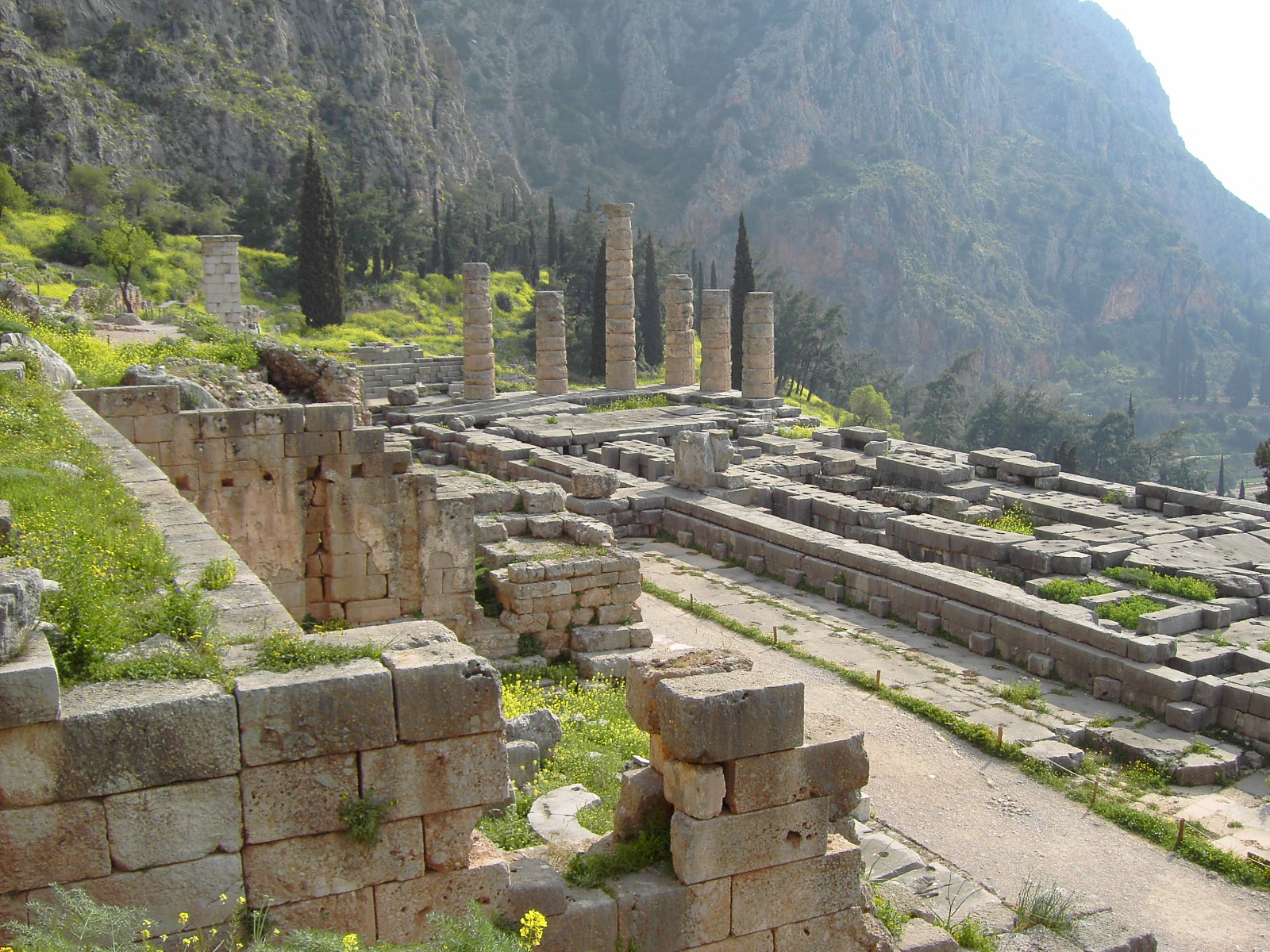
This exhibit in Delphi makes me want to go back to Greece so badly (that, and the fact that my Midwestern locale is passing through its dreariest-looking time of year):
In a long room in the museum, the Classical bureau, which is directed by archaeologist Athanasia Psalti, has set up an exhibition of 40 stone steles ranging from the Archaic period to the first years of Christianity, representing just a small part of the many epigraphs discovered during excavations in the area[....]I thought the title was charming. When I googled "Delphic Letters" to find out more about the pieces on display, I discovered that this phrase was once used to describe any piece of exhortative prose. It makes me wonder what it was like to live in a time when classical allusion were (somewhat) common currency.
The epigraphs on display include some of the most important resolutions decided by representatives of the 12 tribes that lived in the surrounding regions during assemblies held in summer and in autumn, the ''Ieromimnones''.
image credit Pin It

Saturday, January 28, 2012
"Something you cannot purchase or wear - knowledge"
The Miami Herald makes these classical tours sound more serious than many college classes:
Pin It
Close to marking 40 years afloat, and celebrating the second year of its newest makeover and re-naming, the Aegean Odyssey is not for the tattooed masses nor the jewels-by-Harry-Winston crowd. Its passengers love something you cannot purchase or wear — knowledge....The passengers can’t always count on laughing during their pre-tour lectures, but the people booking cruises on Voyages to Antiquity are assured of authoritative presentations followed by educational, even fascinating, visits to places where Western civilizations began and prospered, struggled, and sometimes were extinguished by ruthless competitors. [emphasis mine]I love that first quote - not a definition of knowledge exactly, but a detaching of it from things it's sometimes conflated with (major in the right 'practical' subject, and you'll rake in the money, etc.) And I like that the article acknowledges that most audiences expect humor in lectures, even when it's incongruous with the subject matter.
Pin It
Tuesday, August 16, 2011
Archeology and Imagination: Two views
 |
| via Wikimedia Commons |
The riverbanks of ancient Athens were areas where city dwellers could find not only water but also cool, shady retreats in which to socialize, worship, practice military and athletic skills or pursue their studies. To imagine the relative lushness that once characterized these areas, one might extrapolate from the delightful microenvironment still preserved in the Kerameikos, where the Eridanos’ now-tiny channel continues to be lined with tall reeds and seasonally inhabited by croaking frogs.The other piece, an American archeologist's journal from his Greek dig, reflects on the wider relevance of his discipline:
Archaeology isn't about you. Archaeology isn't about me. Archaeology is wonderfully impersonal; it is about us (here's when pretension kicks in). For more than 10,000 years mankind has been thinking and moving, changing himself and changing his environment. But what makes us who we are? A lot of individuals ask this question of their heritage and look back a few generations to learn something about their ancestors. [....]It's the same with archaeology. No-one is tracing their family line back to Plato, but as a species, as a society, we look at our ancestors to learn something about ourselves. It's not just true of Greek archaeology, it's true of all archaeology, in every part of the world.A richer imaginative life is a wonderful thing, true, but the humility of the last piece might help with this problem also. Pin It
Wednesday, July 13, 2011
Athens on edge
On a recent visit to Athens, Allyn Harvey observed the city's mood:
Pin It
People, even those who appear financially secure, are nervous and discontented. Walking 30 blocks across Athens late one afternoon, I am struck by how often we find ourselves on streets filled with loitering young men, some throwing angry glances our way. I feel under threat. We are two weeks after a round of clashes between protesters and police at Syntagma Square, and two weeks before another round. If I were an Athenian, I'd be seething too.
The ravaged economy ends up taking a toll on our chosen restaurant for our last night in town. The place had closed, so we found ourselves hungry and a little lost about what to do for dinner. We walk into a boutique hotel that seems out of place in the neighborhood and ask two young men at the desk what to do. Half an hour later, we walk into Alexandras, a very Greek restaurant well off the tourist loop. Our table is in a small courtyard. The Greeks around us eat and drink at a leisurely pace. What makes the scene special to us is how normal it seems to be for everyone else. It's one of a very few places where we saw Athenians let their guard down.
Wednesday, June 1, 2011
Greece in the News: Avoiding the Crowds in Athens
 |
| via Wikimedia Commons |

Subscribe to:
Posts (Atom)