Showing posts with label the humanities. Show all posts

Tuesday, May 22, 2012

The pressure on humanities faculty

I have a cousin who wants to become a professor in the humanities. My SO and I are horrified. We're not too miserable now, but we went through some really awful years and landed good jobs through sheer luck. We also fully expect the job market to be worse by the time cousin graduates.

My family is insistent that we not breathe a word of this. We're to be nothing but either neutral or supportive. I've gone so far as to recommend the Academic Job Search Handbook, but that's all. I've listened politely to a lot of talk from my aunt about how this career will 'fulfill' him.

A post on College Misery today reminded me why I want so urgently to warn my cousin. It's from someone who landed a tenure track job against all odds only to find out it's almost impossible to get tenure. 3/4 teaching load and 10-12 articles are required.
My biggest regret is not my “career failure” (I’ll be fine, in the end). Rather, it’s the fact that the state of higher education at this point in time leads to a glut of job seekers who should feel “lucky” to land a crappy job in a toxic department where they work under unreasonable conditions…as long as there’s dental! There’s something wrong with this system. 
SO and I are lucky enough to be at a school with very reasonable research requirements. Still, as an academic I've often found myself in situations similar to this one (an accomplishment turned nightmare because of crazy expectations). Is this the way things are going? Pin It

Monday, March 5, 2012

'Fiction gives us back our human shape'

From a wonderful piece in this month's Utne Reader:

"A few days after I started reading [the science fiction novel 1Q84] I was standing in my Michigan backyard, talking on the phone, when the unusual brightness of the night cause me to look up at the moon -- nearly full, unobstructed by clouds - for the first time in as long as I could remember .... Afterward I called Caroline out to the backyard. If it had been a while since I'd looked at the moon, it had been even longer since we'd looked at it together. The moon is outside our realm of concern. I have to care for my kids, earn a living, be a good husband. What difference does it make if the moon is waxing or waning, full or crescent? For a few quiet moments we looked up at it together before retreating inside from the cold." (Kevin Hartnett, "Father Fiction")
The story is accompanied by a sidebar discussing the ways that reading fiction has been proven to improve social skills. The human in humanities, if you will.

I had my 'looking at the moon' moment last week when I was talking with class about tragic reversal in the Oedipus Rex, and the way no human success or human endeavor lasts forever, according to the Greeks. They were listening to me good-naturedly.

But when I segued into a discussion of how the changeability of human life is a gift, because you can only truly love something if you know you might lose it (unlike the gods), I could tell it broke through their distraction a little. Their expressions became focused and thoughtful. I love those moments. Pin It

Thursday, December 29, 2011

"A cultural language ... in dialogue with the idea of antiquity"

If you haven't already, check out Mary Beard's "Do the Classics Have a Future?" over at the New York Review of Books.

A taste:
The truth is that the classics are by definition in decline; even in what we now call the “Renaissance,” the humanists were not celebrating the “rebirth” of the classics; rather like Harrison’s “trackers,” they were for the most part engaged in a desperate last-ditch attempt to save the fleeting and fragile traces of the classics from oblivion. There has been no generation since at least the second century AD that has imagined that it was fostering the classical tradition better than its predecessors. But there is of course an up-side here. The sense of imminent loss, the perennial fear that we might just be on the verge of losing the classics entirely, is one very important thing that gives them—whether in professional study or creative reengagement—the energy and edginess that I think they still have.
Pin It

Tuesday, November 29, 2011

Benefits of grad school

via Wikimedia Commons

This recent NYT article (on lawyers’ need for training post-law school) fits in with something I’ve been thinking about: what enduring benefits does grad school confer on humanities profs, beyond a credential required for employment?

Grad school made my Latin and Greek much better, of course; writing a dissertation helped my research skills. But I have to wonder if grad schools go about this in the most useful way, since I've only once taught an author from one of my grad school seminars. I've also found writing a publishable article an absolutely foreign experience, despite having written and defended a dissertation.

Maybe going 'back to the basics' is a common reaction to adversity, but it's been odd how often in the five years since I started my career that I've returned to authors, teaching methods or writing tips I encountered in my undergrad classes. I know grad school must have been more than 8+ years of waiting to mature and practicing translation skills, but I'm finding it hard to identify specifics right now.


Pin It

Tuesday, November 8, 2011

'Speed and Quantity of Production'

From "In Praise of Fallow Fields," in the most recent Utne Reader:

"An economy that measures success primarily in terms of speed and quantity of production will eventually become toxic."

Yes. Pin It

Wednesday, October 5, 2011

The humanities enrich your imagination. Does that matter?

This morning I was letting my mind wander while I prepared my Latin 1 lesson. (Since this is a class I could teach, and probably taught better, in my second year of grad school, I need to be distracted in order to take 'preparing' at all seriously). A line from Robin McKinley's The Hero and the Crown ran through my head:

"She had courage enough but little imagination, or she would not have forgotten joy, whatever the weight on her, and heavy enough it truly was." (p. 136)

For a long time I've wanted to post about how the humanities enriches a person's imagination, but I haven't been able to articulate why I think anyone should care. The McKinley quote points towards a reason we should care. Studying literature and art so that we don't 'forget joy' is not money-driven or utilitarian, but it is also not elitist.

An imagination capable of lifting us up from our frequently crappy circumstances is hard to attain without the experience of immersing ourselves in the Other: another culture, or another person's artistic expression. This is the essence of good humanities education.


Pin It

Tuesday, October 4, 2011

A 'Business Humanities' major

Worst Professor Ever had a great post recently, 'You Gonna Use That?', about the misperceptions people have about humanities degrees. As she wrote in the comments section, "it seems the humanities are targeted as “teaching-only” or “caring about narrow subject only” more than other disciplines."


This reminded me of something I've been thinking about for a while: a 'business humanities' major (or minor). Because really, if you ask a typical college student to volunteer for the kind of pigeonholing touched on in WPO's post, many of them might not be interested in a traditional humanities major. And I can't blame them. So let them get the credential that might help them get a job, and also have them take extra foreign language, art, literature, etc. Then give them a term like 'business humanities' that recognizes their efforts at being well-rounded (something employers are supposed to like).


In some sense it would be just a way of restoring the stricter general ed requirements from an earlier time in higher ed, but so what? Those requirements aren't coming back anytime soon. Let's force fewer people to choose between Truth, Beauty and A Decent Standard of Living After College.


Pin It

Friday, September 30, 2011

Should we care about the survival of the humanities?

Until today I had a google alert set up for "the humanities." Today I was looking through about 10 days' worth of alerts and I thought, meh. "The humanities are vital." "The humanities are nice but impractical." 

I make it rule not to be bored on this blog. I might bore others, but I refuse to bore myself :). Teaching undergraduates gives me my fill of squeezing my academic interests into pretty little boxes that offend nobody. (And most importantly, make no one afraid for their grade.) 

I don't study the humanities because I want to impart critical thinking skills and cultural appreciation to college students. I study them because I've always preferred the middle ages and the ancient world to our own. (Okay, maybe not to live in.)

I love the ancient world's immediacy, its handmade quality, its deep thinking (born, I believe of a profound lack of stimulation most of the time, requiring the individual mind to make up the gap). I teach classics at a university less from a desire to develop students' critical thinking, than to invite them to my favorite treehouse. If they find the view from there enlightening, well and good.

So I will still write about the humanities on Classics Daily. But the big abstract arguments about its survival do not need to be repeated here. I don't understand them anyway, since for me poetry and literature are a necessary part of life, not mental broccoli or a fluffy distraction.
Pin It

Thursday, September 29, 2011

"Are our pearls real? You bet they are."

From a study on the benefits of learning Latin and the classics in high school, by the British nonprofit Friends of Classics:
Pin It

Monday, September 12, 2011

"You may be all that the good people who raised you say you are"

"You may be all that the good people who raised you say you are; you may want all they have shown you is worth wanting; you may be someone who is truly your father’s son or your mother’s daughter. But then again, you may not be."

Via Mental Multivitamin comes this (mostly) excellent essay in the Oxford American, "Who Are You and What Are You Doing Here?" I love the anecdote about his high-school graduate father demanding that he major in what interests him (Parents who don't have upper-middle-class status to protect might be the last ones with the gut to do that.) I love the discussion that follows about the purpose of college, an unusually articulate definition of 'finding yourself.' I don't love the excessive partisanship towards the humanities. I also don't like the use of the "don't worry about making money, you'll write a successful book" argument:


                        "[The elementary school teacher] buys shirts from the Salvation Army, has intermittent Internet, and vacations where he can. But lo—he has a gift for teaching. He writes an essay about how to teach, then a book—which no one buys. But he writes another—in part out of a feeling of injured merit, maybe—and that one they do buy.         Money is still a problem, but in a new sense. The world wants him to write more, lecture, travel more, and will pay him for his efforts, and he likes this a good deal. But he also likes staying around and showing up at school and figuring out how to get this or that little runny-nosed specimen to begin learning how to read."
Writing a successful book is rare. Maybe you'll just be poor but happy. And doctors and scientists can be soulful and authentic too.


Another essay in the same issue of the OA is a useful corrective. Emily Witt reviews Ross Perlin's Intern Nation and largely agrees with the book's premise that labor, especially that of the recent college graduate, is massively undervalued. If elementary teachers were paid more they might not have to bet on that book. Pin It

Wednesday, September 7, 2011

"As if celebrating beauty were something to be ashamed of"

The Great Courses’ uninhibited enthusiasm is so alien to contemporary academic discourse that several professors who have recorded for the firm became defensive when I asked them about their course descriptions, emphatically denying any part in writing the copy—as if celebrating beauty were something to be ashamed of.
I take a piece like this (from City Journal) with a grain of salt, of course. The study of art and literature is always evolving, and newer approaches such as theory can be made interesting and relevant, as long as the lecturer is interested in doing so. Not all professors are. Some are teaching to whatever audience already 'gets' what they are doing, with the rest of the class passively along for the ride.

The audience [of the Great Courses DVDs] —mostly older professionals with successful careers—sees the liberal arts as a life-changing experience, observes Louis Markos, an English professor at Houston Baptist University who has recorded courses on C. S. Lewis and on literary criticism for the company. “They are hungry for this material.”
This resonated with me. When I introduced my Latin students to the development of the alphabet I was forced to remember where I first learned about Phoenician writing systems, and the answer surprised me: in my grandparents' living room. They had shelves of Time-Life books about literature, art and history, which I read when I was bored as a little kid. My grandfather was an undiagnosed dyslexic who had some difficulty finishing college, whose father had a sixth grade education. His home office had shelves of Shakespeare and rigorous nonfiction books. My grandmother recently told me about their trip to Greece with two other couples, and how my grandfather studied Greek history and mythology so he could serve as their tour guide. I wish I could find an undergraduate half that enthusiastic sometimes.

So City Journal may go a little far in advocating a college curriculum modeled on these recorded lecture series, but their point about daring to revel in the beauty of the Western aesthetic tradition is well taken. Pin It

Tuesday, August 23, 2011

Good teachers are made by their circumstances

Waiting for my first-year Latin class to start this morning, I was thinking about the number of times I've taught this course. I haven't always been superlatively successful (meaning good evaluations). One time, in grad school, I had a Latin class that absolutely adored me. And I think that hurt my efforts to be a consistently good teacher of Latin.

First, when I ran into those students outside of class I was afraid of any cracks showing in my "fun teacher" persona. Second, after I finished that class I was officially a "good Latin teacher." But the problem was that most of the things I did with that class have not worked with subsequent classes (aside from obvious activities like translation and form review, I mean).

My "good class" was small (13 students) and came the year after my first TA year as a Latin teacher. My ratings that first year were mediocre. So I had the automatic advantage of a small class (you can personally interact with everyone, hand tests back right away, etc.) I had the further advantage of a self-selected group who wanted to study Latin even if their instructor had so-so reviews (not always a given).

So I treasure the memory of those students and that class, but I try to remember that, contrary to popular wisdom, good teachers are made by their circumstances.


Pin It

Saturday, August 13, 2011

What are the humanities good for: rhetoric

The humanities need a far more articulate defense (as I have blogged about here.) Over at The Australian they seem to be giving a lot of space to this, which is a good start, but I am often frustrated by their articles.

I look for someone to explain what benefits come from the study of the humanities, and all too often the piece sputters out with a "well.....people who study the humanities become productive citizens, and c'mon, we all know they are kind of important."

This is not nearly good enough. And this kind of non-argument ignores the very real practical benefits of humanities study. Chief among these for most people is a better understanding of rhetoric. I can't think of anything that better facilitate independent, creative thought than the ability to tell rhetoric from reality. You can send someone out into the world knowing as many computer languages as you want, but if they are vulnerable to politicians, reality tv and silly commercials, they're not going to have the impact on the world that you hope for.

UPDATE: a better articulate defense of the humanities would help with problems like this.

Pin It

Tuesday, August 2, 2011

Crowd-sourcing classics research

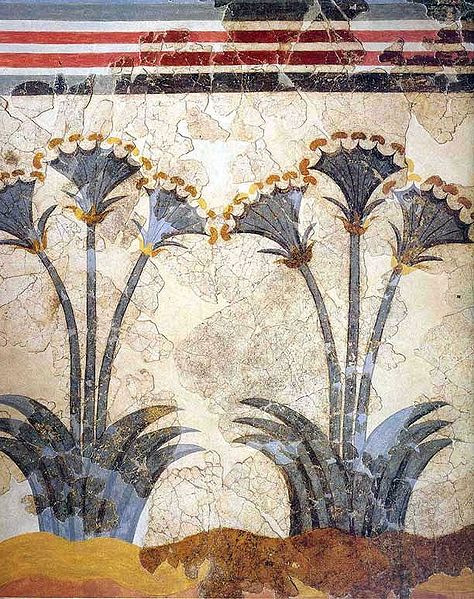
Wall painting of papyrus plants
A pair of articles reminds me how grateful I am for online research tools, as a professor at a somewhat isolated and small university. Oxford University is asking the public to help them transcribe the remaining Oxyrhynchus papyri. Go to ancientlives.org and you can view a section of one of the papyri and match the letters with standard Greek characters. Papyrology can be an elusive discipline even for professional classicists, so this is a truly exciting project.

The other piece is over at the NYT Arts Beat blog, on a Google tool that lets you search for strings of words in their Google Books archive, and track their use over time (the 'Ngram Viewer'). Google Books and Google Scholar have been a huge boon to me as I have bounced all over the country from one temporary teaching job to another*. I often didn't have access to an adequate classics library, and it was just reassuring to know I could look at a few pages of any book I needed. archive.org is also a great source for older books.

*Hopefully we will be staying in the place we most recently moved to! Hooray! Pin It

Sunday, July 31, 2011

Classicists in the real world

I read some of these articles about "saving the humanities" and I am amazed at the gloomy picture they paint. It's a naive question, I know, but: what's wrong with someone getting an innocent little undergraduate degree in Classics or English? Why doesn't anyone want to do it? Why are their prospects so dim if they do?

Lots of people work in fields unrelated to the topic of their degree. My brother has a degree in sociology and works in sales (very successfully, I might add). Why do I get the feeling a classics major would have a hard time getting a job like that? William Pannapacker's article in Slate, "How to fix humanities grad school," inspires a couple of thoughts on this.

Pannapacker writes about how an English PhD applying for regular jobs has to hide their advanced degree "like a prison term." He also insists that professors need to be in touch with the current (lamentable) state of their profession. Students and teachers need to abandon the idealism that aids in their exploitation.

Classics BAs face a similar set of problems. Non-classicists make assumptions about their level of experience or interest in the real world. It can also be very hard to convince the students themselves to venture out into the real world. My husband and I have worked hard to convince several students not to pursue Classics PhDs. It seems like a sweet life (and it can be, if everything works out). To a certain extent students see only the people for whom it has worked out. Pin It

Monday, July 11, 2011

The real economic value of a humanities degree

Matthew Guteri, a professor of American Studies at Indiana University, has written just the kind of essay  that I wished for in a previous post. He acknowledges the seeming irrelevance of an idealist defense of the humanities:
There is a profound richness in everything, I offered – even in the seemingly predictable life of a barista or waitress. No one knows what the future might bring, and no one can predict what sort of skills might be useful. Invest in your mind, I said, for the long term.
This, one might suppose, is old-fashioned advice given by a dying breed: the starry-eyed dreamer-professor who has been rendered increasingly irrelevant by the new matrix of instrumentalist, quasi-vocational, more-easily-assessed training that is ascendant in the universe of higher education.
He counters this by pointing out certain naive but common assumptions about the value of a college education:
...we need to stop blaming the humanities for not preparing students for some idyllic life – filled with afternoon martinis, big property, and gleaming SUVs – that wasn’t for everyone to begin with, and isn't available anymore, except without the dangerous extension of credit.
Finally, he argues that humanities graduates are well equipped to contribute to America's chief export at the moment, culture:
Oh, we love to celebrate our ingenuity in science and manufacturing, but in this epoch of the flat world, our dominance in those fields is no longer assured. What we do best – despite the near total absence of public support – is paint, and sing, and compose, and write, and read, and watch. And then argue and debate over all of it.
Read the whole thing.
  
Pin It

Friday, July 8, 2011

Briefly Noted: Gods Behaving Badly, the humanities under fire in Sweden, the pleasures of Seneca

Marie Phillips' novel Gods Behaving Badly is becoming a movie with an A-list cast. Maybe this is the decent movie about ancient Greece I've been hoping for. I've put her novel on my Kindle: it's about the Olympian gods, their worship long since faded away, working as dog-walkers and TV psychics in London (New York in the movie; Hercules in New York, anyone?)

A business group in Sweden has recommended that grants to humanities students be reduced. Swedish college students receive study grants, and the Confederation of Swedish Enterprise urges that students who study high-demand subjects such as engineering receive larger grants. This story reminds me of an articulate defense of humanities study that I hope to blog about later this week.

Neil Steinberg has an enjoyable piece on the pleasures of the reading Hesiod and Seneca in their Loeb Classical Library editions. I enjoyed his description of Seneca ("as useful as a pocketknife"); Seneca, the Roman philosopher whose uncompromising Stoic ideals helped him cope with the Emperor Nero, would doubtless have considered it a compliment.

Pin It

Wednesday, July 6, 2011

Defending the humanities: the idealist vs. the materialist argument

Inspired by the cuts to humanities funding in Britain, Australia seems to be having a vigorous debate about their role in public life. In an earlier post I shared the views of John Armstrong, who believes that the public could benefit much more from the humanities, if scholars would only direct more of their work to a general audience. Now a new piece from The Australian contrasts the "idealist" view of Armstrong with the "materialist" view of Stuart Cunningham, who prefers to focus on the contributions humanities graduates make to government and industry:

In an essay in the Griffith Review earlier this year, Armstrong wrote that the humanities had become inward looking, were anti-business and were characterised by a left-wing monoculture, all of which contributed to a disconnect with wider society.
"There is a very good fit between the potential for the humanities and the needs of society. But we have set things up in such a way that the services that the humanities offer to our society are actually not that good a version of what they could offer," Armstrong told the HES.
The question is whether or not the humanities can reform itself without having the type of crisis that has hit it in Britain.
"The great hope is that you can learn in times of safety the lessons that other people have had to learn by failure and in times of terrible trouble," he says.
But Stuart Cunningham, director of the ARC Centre of Excellence for Creative Industries and Innovation, regards such comments as an "idealist argument" rather than reflecting the actual importance of the humanities, arts and social sciences in producing large numbers of graduates who work productively for the economy and government. He argues HASS teaches about two-thirds of students. It is this "materialist argument", as he calls it, that needs to be advanced to the base funding review and which, he says, is so self-evident that it sometimes gets lost.
I can see the practical appeal of the materialist argument. It's something that can seem comforting in a funding environment that sees universities as drivers of economic growth. Its weakness lies in its almost complete disconnection from the content of humanities instruction. People earn humanities degrees and then attain leadership positions; if we don't draw explicit connections between the former and the latter events, who's to say they would not do even better with engineering or science degrees?


Pin It

Thursday, June 30, 2011

The UnCollege Movement

I was in college a looong time. And now I am having a lot of trouble getting a job in the field I trained in for the better part of a decade. Debates about the value of college are therefore of interest to me. The UnCollege movement was founded by a winner of the Thiel Fellowship, which is intended to reward talented, creative people for not going to college. Check out this article in the Seattle Times about the movement. I also enjoyed this post about it over at Mental Multivitamin, particularly the second comment:
It's funny but the people I know who are most successful in their careers and doing well in this economy have either gone to very elite schools like MIT, top public universities, or have skipped college altogether (or dropped out). I don't think its causal so much as indicative of a personality type. A very bright, motivated, ambitious, entrepreneurial young person just isn't going to be happy in a third tier directional-state school classroom for 4 years and are likely to find alternatives.  
Pin It

Thursday, June 23, 2011

Academics need to 'sell' the humanities

 From theaustralian.com.au comes a fascinating piece on the need for humanities scholars to engage the wider public:


JOHN Armstrong is a rare creature, a university philosopher who thinks far too many humanities academics are talking to the wrong people, each other.
The author of scholarly studies of art, love and beauty, with a PhD from University College, London, politely dismisses the accepted academic wisdom that scholarly specialisation is essential.
[....]
 "In principle, humanities could be bearers of knowledge for the whole society. One of the big things they could accomplish is to help people think about issues that have meaning and importance, and this can be done without a systematic engagement with the details of, say, history."
Armstrong accepts that a general audience will not want the detail academic experts expect - "You can't expect non-specialists to get interested in footnotes" - but neither is he especially upset if their absence is the price of putting the humanities back on the agenda: "It's not that we are short of information, we are short of communication."
Read the whole thing. Pin It