Thursday, December 15, 2011

Medieval art and red-and-green symbolism

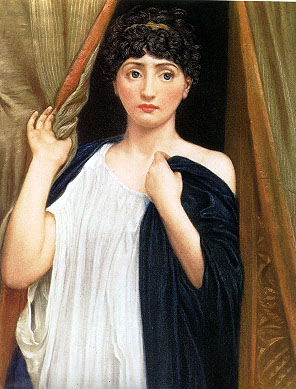
via Wikimedia Commons
This BBC video on the origins of the Christmas color scheme is delightful. Stick with it past the mildly tedious bit about Coca-Cola imposing its own colors on Santa Clauss. It's worth it.

I love that the ultimate explanation has to do with the survival of medieval churches. I love pre-Renaissance churches (and Greek and Roman temples, for that matter.) These early churches have a naive and additive quality to their artwork that I find charming. Rather than presenting one designer's vision as many post-medieval churches do, these early churches are presenting a community's vision. Pin It

Wednesday, December 14, 2011

All of this has happened before ...

...and all of it will happen again.

From the New Statesman blog:
"Linguistic disobedience" might be achieved in many ways: by speaking out of turn, by disrupting syntax and "meaning", and by offering comparisons between disparate things. It might be a case of the poem acting as "witness", a recording of what's normally "unseen", ignored or denied. It can be subtle -- using allusion and slight shifts from convention -- and it can be volatile -- from agitprop to rants.
From Sappho 16 (tr. Anne Carson):
Some men say an army of horse and some men say an army on foot
and some men say an army of ships is the most beautiful thing
on the black earth. But I say it is
    what you love.
Pin It

Saturday, December 10, 2011

Animal Metamorphosis in Celtic and Classical Myth

via Wikimedia Commons
I just finished the delightful new novel The Scottish Prisoner, which makes extensive use of the Wild Hunt myth. The Wild Hunt is a widespread European myth (although, as Gabaldon points out in the author's note, not a native Celtic one.) It is a spectral group of hunters led by a mythological figure, frequently the Norse god Odin.

I vaguely recalled a story associated with the Wild Hunt about a girl having to pull her fiance out of the procession and hold him while the fairies transform him into a series of animals. I (again, vaguely) thought there might be interesting similarities between this story and the 'courtship' of Peleus and Thetis, in which he compels her to wed him by restraining her while she transforms. Actually reading up on these narratives made everything quite a bit more complicated.

The Wild Hunt story comes from a Scottish ballad called Tam Lin. Everything I told you above is true, except that the fiance is a) a fairy who b) assaults young women traveling through 'his' territory. Not to mention that c) his fiancee is pregnant and d) he's about to be given to the devil as the fairies' 'tithe to hell', a tax paid every seven years.*

His fiancee, Janet, wants to avoid having to marry an older knight she doesn't love just because she is pregnant. She has returned to Tam Lin's forest to obtain an herb that will cause her to miscarry. Tam Lin tells her how to turn him back into a mortal man, explaining that he believes he is about to be given to the devil by his fairy buddies. She does so and weathers the anger of the fairy queen to, presumably, live happily ever after.

Thetis is a minor goddess in the historical period in ancient Greece who may have been much more powerful in prehistoric times. Zeus would like to 'marry' (make baby gods) with her, but fears the prophecy that her son will be more powerful than his father. She is married off to the Greek hero Peleus to neutralize this threat. The sea god Proteus, an expert on metamorphosis, tells him how to overcome Thetis' transformative abilities. She agrees to marry him after he creeps up on her asleep and restrains her through a series of transformations into water, fire and serpents. Apart from his skill at goddess-abducting, Peleus is a rather unremarkable hero, a grandson of Zeus and a companion of Heracles, like most of the generation prior to the Trojan War.

The Peleus and Thetis myth is a distasteful story even by ancient standards. (Although the modern 'love match' was an alien concept, complaints about arranged marriages and the unequal treatment of goddesses are not unknown in Greek literature.) Surprisingly, I found that 'Tam Lin' was far less egalitarian than I remembered. Tam Lin commits serial assaults on woman and only agrees to marry Janet because it's better than an eternity spent in Hell. Janet is motivated less by love than a desire to avoid unwed motherhood or marriage to the "auld grey knight" who revealed her secret.

The differences between the stories come down to one thing: female agency. Neither myth reflects a romantic world, nor one particularly fair to women, but any ancient Greek would have been shocked at the notion of a woman lying in wait for a demigod lover and forcibly restraining him as a way of saving his life (so to speak). There are strong, forceful women (within limits) in Greek literature, but the total impossibility of a myth like Tam Lin reminds us not to look for Wonder Woman in the megaron.


*This is all based on the earliest version, Child 39 A.  The 'tithe to hell' plays an important role in Gabaldon's novel. Pin It

Wednesday, December 7, 2011

Latin teacher, pigeon benefactor: Carl Wingate

This obituary of a former Jesuit turned married (and apparently quite eccentric) Latin teacher caught my eye. Carl Wingate graduated from Notre Dame with a master's in biology, but spent 30+ years teaching Latin at a high school in Washington state. He translated 'Star Wars' into Latin and wore clothing he painted with religious and movie themed designs.

The first reason his extraordinary life interests me: it's a good example of how Classicists with varied backgrounds can make better teachers and colleagues. Have you been around a group of classicists lately? We can be a bit boring, not to mention neurotic. I understand why -- we've spent over a decade of our lives training for a job that, in many cases, can be taken away at any moment. We are afraid to think about anything besides classics, and sometimes we almost don't remember how to, because it's been so long. So maybe Carl can inspire us to chill a little.

The second reason he interests me is that I enjoy eccentric people and hope they are not a disappearing breed. Vexillum monstruosum tuum volet! (Let your freak flag fly!) Pin It

Monday, December 5, 2011

'Though I loved you well, I wooed you not': Troilus and Cressida's mythological roots

I posted recently about the Recuyell of the Historyes of Troy, the dominant version of the Trojan war myth before the western world rediscovered ancient Greek. An anecdote from the Recuyell inspired Shakespeare's Troilus and Cressida

via Wikimedia Commons
Cressida is someone I've thought about from time to time since that post. She does not appear in the ancient version of the Troy myth; her name is a corrupted version of Chryseis and in some medieval works she is called Briseida (which of course is a corrupted version of Briseis). 

Anyway, medieval audiences could not get enough of her and the love triangle between her, Troilus (a Trojan) and the Greek warrior, Diomedes. She betrays Troilus by starting an affair with Diomedes after being captured by the Greeks. Okay... I'm obviously intrigued by a worldview where a captured woman carries on optional 'affairs' with her captors. (She is, admittedly, a hostage rather than a woman captured in a city-sacking.)

And most of all, what about Helen? Why invent this character when you seemingly have a perfectly good unchaste women available? I'm wondering if it has to do with the medieval notion of the divine right of kings: Helen couldn't play the role of the corrupt woman because, as a queen, she was purer than the rest of the human race. I would love to read about this more (and hopefully I'll remember to do so in about 6 years when I have time ...)

Pin It

Friday, December 2, 2011

Curbside Haiku, the new Parthenon?

courtesy of the Safe Streets Fund
As a fan of ancient Greek occasional poetry, I'm interested in modern resurgences of poetry in the public sphere. The New York City DOT is making use of poetry's playful and memorable qualities with their "Curbside Haiku" campaign. The signs are erected along city streets, with artwork based on traditional street signs and a poem dealing with a traffic safety issue. In the best classical tradition, the project aims to use beauty to "engage, edify and inform":

"Curbside Haiku seeks to merge public art with public awareness to infuse a bit of beauty and joy into the public sphere with the images while underscoring the realities of the message with poetry.  I’m aiming to engage, edify and inform and nothing does that better than art."


Pin It

Thursday, December 1, 2011

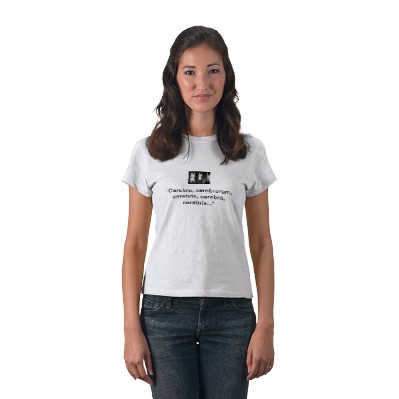
Latin Zombies t-shirt and mug

New in the shop: the "Latin zombies" design on a t-shirt and mug. Dead languages and the undead ... I couldn't resist the pun. The design features zombies out for a stroll while declining the plural of cerebrum (Cerebra, cerebrorum ... "brains, brains.")

Previous offerings:

Pin It