Showing posts with label Greek culture. Show all posts

Monday, May 28, 2012

Memorial Day

The Kerameikos, via Wikimedia Commons
Most of those who have spoken here before me have commended the lawgiver who added this oration to our other funeral customs. It seemed to them a worthy thing that such an honor should be given at their burial to the dead who have fallen on the field of battle. But I should have preferred that, when men's deeds have been brave, they should be honored in deed only, and with such an honor as this public funeral, which you are now witnessing. Then the reputation of many would not have been imperiled on the eloquence or want of eloquence of one, and their virtues believed or not as he spoke well or ill. For it is difficult to say neither too little nor too much; and even moderation is apt not to give the impression of truthfulness. 
-Pericles' Funeral Oration, tr. Benjamin Jowett (1881) Pin It

Wednesday, January 25, 2012

"Plague bad, light good"

Mary Beard discusses  the complications that can arise when filming on the ancient Acropolis:
The script vetting [by the Greek authorities] comes right down to the interpretation of classical history and culture. Try saying that the god Apollo was a god of plague as well as of light and purity and, I'm told, you'll have a struggle on your hands. You'll need to go armed to the vetting meeting with a copy of the Iliad (which says just that) under your arm, and be prepared for a fight. (The fact is that Greek authorities dont like nasty aspersions being cast on their ancient gods. Plague bad, light good.)
I'm reminded of our Greek tour guide who defended Heinrich Schliemann on a daily basis. But, as I came to find out, so does Michael Wood (In Search of the Trojan War). Pin It

Tuesday, September 27, 2011

Let's hear it for Tyche

via Wikimedia Commons
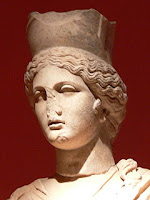
Tyche, a goddess whose name can mean "happenstance" or "chance," ruled over the destinies of Greek cities. (Her Roman name is Fortuna, but it sounds so much better, because it is less familiar, in Greek.) Her crown, the one worn by the statue at right, represents a city's walls. The Greeks attributed to her all events in a city's history that had no rational explanation: floods, fires and, one hopes, some positive occurrences as well.

Something I find most instructive about the ancient world is how much harsher it was than our own. How much more random, even how much more boring. In the face of terrible disasters with no safety net, the Greeks were comforted by worshipping at the altar of randomness personified.

Reading some of the posts about the academic job market over at College Misery (oh, the memories!) started me thinking about Tyche vs. our straightjacketing sense of personal responsibility. As young academics, we are told that we are natural scholars and will be wonderful teachers. Then we encounter the job market, in which the odds are overwhelmingly against finding a good job. Rather than admitting this, our advisers and many advice books imply that changing some small detail about our applications or publications will of course change our luck. And what's more, we should have thought of this before and basically have no one but ourselves to blame that we have to spend another year on the market.

This is insane. We need to get with the idea that there are things outside our power. Including some of the more random comments on student evaluations. Including whether the topic of a junior scholar's handful of publications fits the handful of tenure track jobs available in his or her field. The Greeks knew it wasn't all up to them.

Let's hear it for Tyche, a divinity whose time has come. Pin It

Monday, September 5, 2011

Labor Day

Gustave Moreau,
Hesiod and the Muse
... There was not one kind of Strife alone, but all over the earth there are two. As for the one, a man would praise her when he came to understand her; but the other is blameworthy: and they are wholly different in nature. For one fosters evil war and battle....But the other is the elder daughter of dark Night, and the son of Cronos who sits above and dwells in the aether, set her in the roots of the earth: and she is far kinder to men. She stirs up even the shiftless to toil; for a man grows eager to work when he considers his neighbour, a rich man who hastens to plough and plant and put his house in good order; and neighbour vies with his neighbour as he hurries after wealth. This Strife is wholesome for men.
-Hesiod, Works and Days, tr. Evelyn-White
 
Pin It

Wednesday, August 24, 2011

A favorite passage from Margaret George's Helen of Troy

This passage, where Zeus in swan form attacks Clytemnestra and caresses Helen with his beak, gave me chills:
"Stop it," I whispered, my lips almost touching the hard beak.
The beak opened and grasped my cheek. There were little ridges inside it, tiny points, and I could feel them pinching my flesh. He held the skin gently, swaying his head a bit, as if he were caressing - or kissing. Then he let go and pulled back to look at me again. He ruffled his feathers, making them rise up and unseat me, so that I slid off. He stood for a moment, regarding me. Then he arched his neck once more and patted my hair with his head. He then turned and reentered the water, floating serenely away to join his companions.
Pin It

Tuesday, August 16, 2011

Archeology and Imagination: Two views

via Wikimedia Commons
I've often thought that another benefit of humanities study is a richer imaginative life. It turns out this is an essential quality for archeologists. Via rogueclassicism comes this piece that asks us to imagine Athens as it was when its main rivers, the Eridanos, Illissos and Kifissos, flowed freely rather than being paved over or confined to channels:

The riverbanks of ancient Athens were areas where city dwellers could find not only water but also cool, shady retreats in which to socialize, worship, practice military and athletic skills or pursue their studies. To imagine the relative lushness that once characterized these areas, one might extrapolate from the delightful microenvironment still preserved in the Kerameikos, where the Eridanos’ now-tiny channel continues to be lined with tall reeds and seasonally inhabited by croaking frogs. 
The other piece, an American archeologist's journal from his Greek dig, reflects on the wider relevance of his discipline:
Archaeology isn't about you. Archaeology isn't about me. Archaeology is wonderfully impersonal; it is about us (here's when pretension kicks in). For more than 10,000 years mankind has been thinking and moving, changing himself and changing his environment. But what makes us who we are? A lot of individuals ask this question of their heritage and look back a few generations to learn something about their ancestors. [....]It's the same with archaeology. No-one is tracing their family line back to Plato, but as a species, as a society, we look at our ancestors to learn something about ourselves. It's not just true of Greek archaeology, it's true of all archaeology, in every part of the world.    
A richer imaginative life is a wonderful thing, true, but the humility of the last piece might help with this problem also. Pin It

Thursday, August 11, 2011

Words as Talismans


Via Languagehat I discovered this Atlantic article on the Eerie Beauty of Rare Alphabets. A writer carves letters from little-known alphabets into wood and outlines them in ink. The commenters are split about evenly between questioning the author's loose definition of 'alphabet' and marvelling at the beauty of the pieces. 

The Atlantic writer opens by commenting on the difference in appearance between offset and letterpress type. The article from the very beginning focuses more on the physical beauty of letters than their ability to convey meaning. 

I've actually always been a sucker for this. I have a somewhat dilatory interest in inscriptions and papyrology (as I blogged about previously) that has a lot to do with the aesthetic appeal of these objects. Oh sure, they preserve authentic spellings and pronunciations, they are the major means of discovering new works by ancient authors. 

But they're also pretty. The combination of visual appeal with the weighty or poignant meaning that many ancient inscriptions often carry is irresistible to a romantic mind (and as one of my grad school professors used to say, all classicist are also romantics).

Pin It

Tuesday, August 2, 2011

Crowd-sourcing classics research

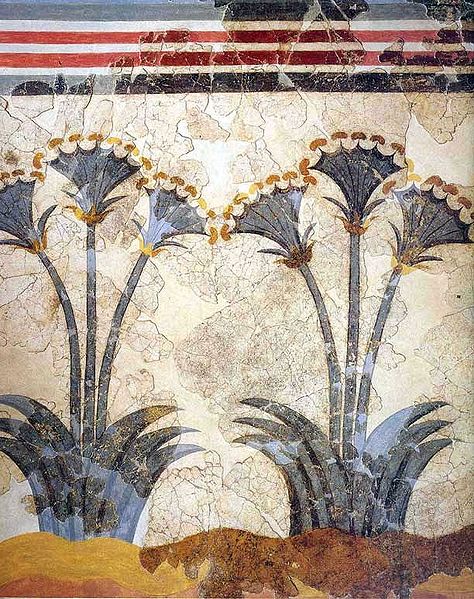
Wall painting of papyrus plants
A pair of articles reminds me how grateful I am for online research tools, as a professor at a somewhat isolated and small university. Oxford University is asking the public to help them transcribe the remaining Oxyrhynchus papyri. Go to ancientlives.org and you can view a section of one of the papyri and match the letters with standard Greek characters. Papyrology can be an elusive discipline even for professional classicists, so this is a truly exciting project.

The other piece is over at the NYT Arts Beat blog, on a Google tool that lets you search for strings of words in their Google Books archive, and track their use over time (the 'Ngram Viewer'). Google Books and Google Scholar have been a huge boon to me as I have bounced all over the country from one temporary teaching job to another*. I often didn't have access to an adequate classics library, and it was just reassuring to know I could look at a few pages of any book I needed. archive.org is also a great source for older books.

*Hopefully we will be staying in the place we most recently moved to! Hooray! Pin It

Sunday, July 24, 2011

Favorite Passages from Gods Behaving Badly

"All I did was turn one little mortal into a tree. This is getting totally out of proportion. Harming mortals is fun. We've all done it." (kindle ed. p. 401)

"Odysseus was scrawny," said Hermes. "And he was one of the best [heroes]."
"He didn't look like a mouse," said the woman.
"He was pretty short."
"Yes, but he didn't have such rodenty features."
"Well, it was the best I could do at such short notice." (kindle ed. p. 3460) Pin It

Tuesday, July 19, 2011

Briefly Noted: Ancient vases buried in cat litter, tragicomic 'Pandora'

One of my favorite things about archeology is the way everyday life intrudes on it. The Greek artifacts Roberta Beach Jacobson discovered while clearing out her cat litter dump site are a great example.


Pandora: A Tragicomic Greek Romp, despite involving Greek mythological characters in non-canonical plots (a pet peeve of mine) sounds worth seeing. The reviewer observes that "the characters throw ... curve balls at archetypes"; and that to me is a salient feature of the original Greek myths. Look into a Greek mythological figure, such as Heracles or Odysseus, and you will find them behaving in completely opposite ways in various myths. It's just that usually one myth or set of myths has become dominant.


Pin It

Wednesday, July 13, 2011

Athens on edge

On a recent visit to Athens, Allyn Harvey observed the city's mood:
People, even those who appear financially secure, are nervous and discontented. Walking 30 blocks across Athens late one afternoon, I am struck by how often we find ourselves on streets filled with loitering young men, some throwing angry glances our way. I feel under threat. We are two weeks after a round of clashes between protesters and police at Syntagma Square, and two weeks before another round. If I were an Athenian, I'd be seething too.  
The ravaged economy ends up taking a toll on our chosen restaurant for our last night in town. The place had closed, so we found ourselves hungry and a little lost about what to do for dinner. We walk into a boutique hotel that seems out of place in the neighborhood and ask two young men at the desk what to do. Half an hour later, we walk into Alexandras, a very Greek restaurant well off the tourist loop. Our table is in a small courtyard. The Greeks around us eat and drink at a leisurely pace. What makes the scene special to us is how normal it seems to be for everyone else. It's one of a very few places where we saw Athenians let their guard down.
Pin It

Friday, July 8, 2011

Briefly Noted: Gods Behaving Badly, the humanities under fire in Sweden, the pleasures of Seneca

Marie Phillips' novel Gods Behaving Badly is becoming a movie with an A-list cast. Maybe this is the decent movie about ancient Greece I've been hoping for. I've put her novel on my Kindle: it's about the Olympian gods, their worship long since faded away, working as dog-walkers and TV psychics in London (New York in the movie; Hercules in New York, anyone?)

A business group in Sweden has recommended that grants to humanities students be reduced. Swedish college students receive study grants, and the Confederation of Swedish Enterprise urges that students who study high-demand subjects such as engineering receive larger grants. This story reminds me of an articulate defense of humanities study that I hope to blog about later this week.

Neil Steinberg has an enjoyable piece on the pleasures of the reading Hesiod and Seneca in their Loeb Classical Library editions. I enjoyed his description of Seneca ("as useful as a pocketknife"); Seneca, the Roman philosopher whose uncompromising Stoic ideals helped him cope with the Emperor Nero, would doubtless have considered it a compliment.
Pin It

Tuesday, July 5, 2011

Greek travel as altruism and inspiration

A pair of travel articles highlight the disjunction between the terrible difficulties of modern Greece with the beauty and inspiration of the ancient sites. The travails of modern Greece are not explicitly mentioned in Juliet Rix's piece on Crete, but the truly excellent quality of their tour is a poignant reminder of how serious many Greeks are about safeguarding their heritage:
Archaeology isn’t always that easy, as we discover at the tiny Sitia museum into which we are driven by rare rain. The place doesn’t look like much and the labels are lousy, but we have insider information: one of our guides is responsible for the dig that produced many of the finds. We stand in front of the star exhibit, a statuette known as the “Palaikastro Kouros”, a lithe Minoan male (“dismissive colleagues say he’s a Ken doll”) with a figure not unlike Evans’s Lily Prince.
We have our attention drawn to the Egyptian influence in the pose, and the delicacy of the carving on the hands, feet and hair. And then our archaeologist says, “The legs were in 300 pieces. We sieved six tons of soil to find them and his eyes… It took the conservator three years to rebuild him.” Times have clearly changed in archaeological reconstruction — and that’s no bull either! 
Jonathan Jones' piece on Delphi right stresses the extreme beauty of Delphi's landscape and the uplifting effect of a visit to the archeological site:
It was a place of holiness shared by all the rival city states of ancient Greece, where they sent gifts and raised sanctuaries and shrines. All this was done in homage to the Delphic oracle of Apollo. Games were held here, the classical Hellenic world gathered here, and what remains is a captivating landscape that fills you with joy, rhapsody, and a sense of what human beings are capable of. 
This is the thought-provoking thing about Greek antiquities: they make you believe in us, the humans. 
Pin It

Monday, July 4, 2011

Ancient Greece in Film: Immortals

Ancient Greece seems to have a rather troubled relationship with film. Maybe the problem is with Greek mythology, and the colorful, exciting characters found therein. Moviemakers seem to find these larger-than-life figures so appealing that they tend to overlook anything else that would make a good movie: realistic ancient Greek history (there were no flipper handed giants among the Persian soldiers at Thermopylae, sorry, 300) or even actual plots from Greek myth.

And so I come to the point of my post: the plot of Immortals is, as far as I can tell after two semesters teaching mythology and a PhD in Classics, totally made up. And why? There are many legitimate mythological tales about Theseus that would make a good movie. Why does it always have to come down to some half-baked good vs. evil nonsense? Why is it that there can be movies (and TV series) based on ancient Rome that are not totally unbearable, but no halfway decent recent movies based on ancient Greece? Pin It

Sunday, June 19, 2011

Links and Thinks: Hackers look to Odysseus, the Acropolis is closed

The hacker group LulzSec seems to compare itself to the companions of Odysseus, according to an illustration of an ancient Greek warship on its website. Odysseus is both a very positive and a notorious figure in Greek literature, a reputation which perhaps began with his opportunistic soliciting of gifts and the strategic lies he tells in Homer's Odyssey.

The Acropolis is closed to visitors.

The NY Times Review of Books has an interesting discussion about translated novels and the dominance of English on its blog. If you look about two thirds of the way down the page, they get to what seems to be the heart of the argument:


Rather, it seemed that the contemporary writers had already performed a translation within their own languages; they had discovered a lingua franca within their own vernacular, a particular straightforwardness, an agreed order for saying things and perceiving and reporting experience, that made translation easier and more effective. One might call it a simplification, or one might call it an alignment in different languages to an agreed way of going about things. Naturally, there was an impoverishment. Neither of these authors have the mad fertility of Claus; but there was also a huge gain in communicability, particularly in translation where the rhythm of delivery and the immediacy of expression were free from any sense of obstacle.
Was it possible, I asked myself, that there was now a skeleton lingua franca beneath the flesh of these vernaculars, and that it was basically an English skeleton?
Pin It

Friday, June 17, 2011

The Greek Islands: Broken idols of Keros

via Wikimedia Commons
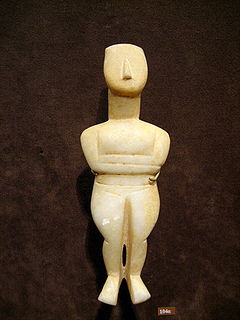
I first encountered Cycladic figures like the one on the right at the British Museum in grad school. My husband and I were on a quickie tour of Europe following our trip to Rome. At the time (this is a little embarrassing) I thought something like, "oh look, they didn't know how to sculpt realistic face or varied body postures."

Now of course, having visited Greece and in particular the excellent small Cycladic Art Museum in Athens, I know better. These figures (which nearly all look exactly like the illustration to this post) represent the dead. Their similarity perhaps had religious significance, and they were carried in processions. A very odd archeological site on the island of Keros in the Aegean Sea has added a new wrinkle. It seems that periodically the old figurines were smashed, presumably so that new one could be created. That seems to be the only explanation for the pits full of broken figurines discovered at the site. Check out this article at the Guardian's web site for more. They have a particularly nice illustration with some of the fragments where you can discern the folded arms, triangular nose, etc.
Pin It

Thursday, June 16, 2011

More on The Gospel at Colonus

If you read my earlier post on the Gospel at Colonus, you may enjoy this very detailed review. The author did a fairly good job of tying together the gospel experience and Greek drama. The former aspect of the play has always intrigued me, but I feel like I have never fully grasped it. The impenetrability of the gospel experience to outsiders reminds me of some of the reasons why classics fascinates me.

The study of Greek and Latin holds examines two societies right on the boundary between local and global (or what passes for global when rowboats are your most sophisticated means of transportation.) A truly local society possesses a sense of community without constantly making a big deal about it; everyone 'gets' the cultural references, the jokes, etc. Romans and Ancient Greeks could be immersed in their local culture in a way that is difficult for us to imagine. At the same time, Rome and Athens were at various periods the most important cities in the western world, and this was a counterforce that pulled them in the direction of the foreign and novel. There is something deeply satisfying about contemplating that eternal tug of war. Pin It

Monday, June 13, 2011

Greece in the News: Savina Yannatou performs Sappho's poems

via Wikimedia Commons
On June 8th in New York Greek singer Savina Yannatou performed lyric poems by Sappho. Like many early Greek poets, Sappho is a semi-mythical figure, but she probably lived in the late seventh and early sixth centuries BC. Her poems make allusions to a group of younger women whom she advises and instructs, but the exact nature of their relationship is unclear. Ann Carson's translation of her fragments is beautiful and accessible and has a reasonably informative introduction.

In case you were unable to make it to Le Poisson Rouge last night, you can listen to Yannatou performing Sappho's lyrics here. A translation of the poems she sings in the video can be found here (start at poem 48). Pin It

Sunday, June 12, 2011

Greece in the News: Closed galleries at the National Archeological Museum

This is borderline tragic. When my husband and I visited Greece last summer, this was our very favorite museum (and we spent every possible minute in museums, when we weren't visiting actual archeological sites). We spent nearly 20 hours on our last day roaming Athens, trying to soak up as much culture as we could, and we spent a huge chunk of that time re-visiting the museum. It is a beautifully done facility, and while I mostly hope that Greece gets it together for the sake of the Greek people, I also hope they do not lose the gains they have made in maintaining their archeological heritage. Pin It

Saturday, June 11, 2011

Greece in the News: Solon and the financial crisis

via Wikimedia Commons
This article on CNBC tries to find connections between a possible debt default in modern Greece and the cancellation of debts by the archaic Greek statesman Solon of Athens. I have a couple of problems with this. First, modern Greece has truly had so many cultural influences come and go that making this direct comparison is like saying that the modern English-speaking world is directly influenced by Beowulf. Second, although Solon is important, the claim that he founded democracy by forgiving debts is quite a stretch. It was an effort by many politicians over several generations; Cleisthenes one hundred years later put the framework of the classical Athenian democracy into place.

Solon certainly was multi-talented, however. In addition to his talent for statecraft, he wrote (rather tediously didactic) poetry. Here's a sample:

Some wicked men are rich, some good are poor;
We will not change our virtue for their store:
Virtue's a thing that none can take away,
But money changes owners all the day. (tr. Dryden)
Pin It